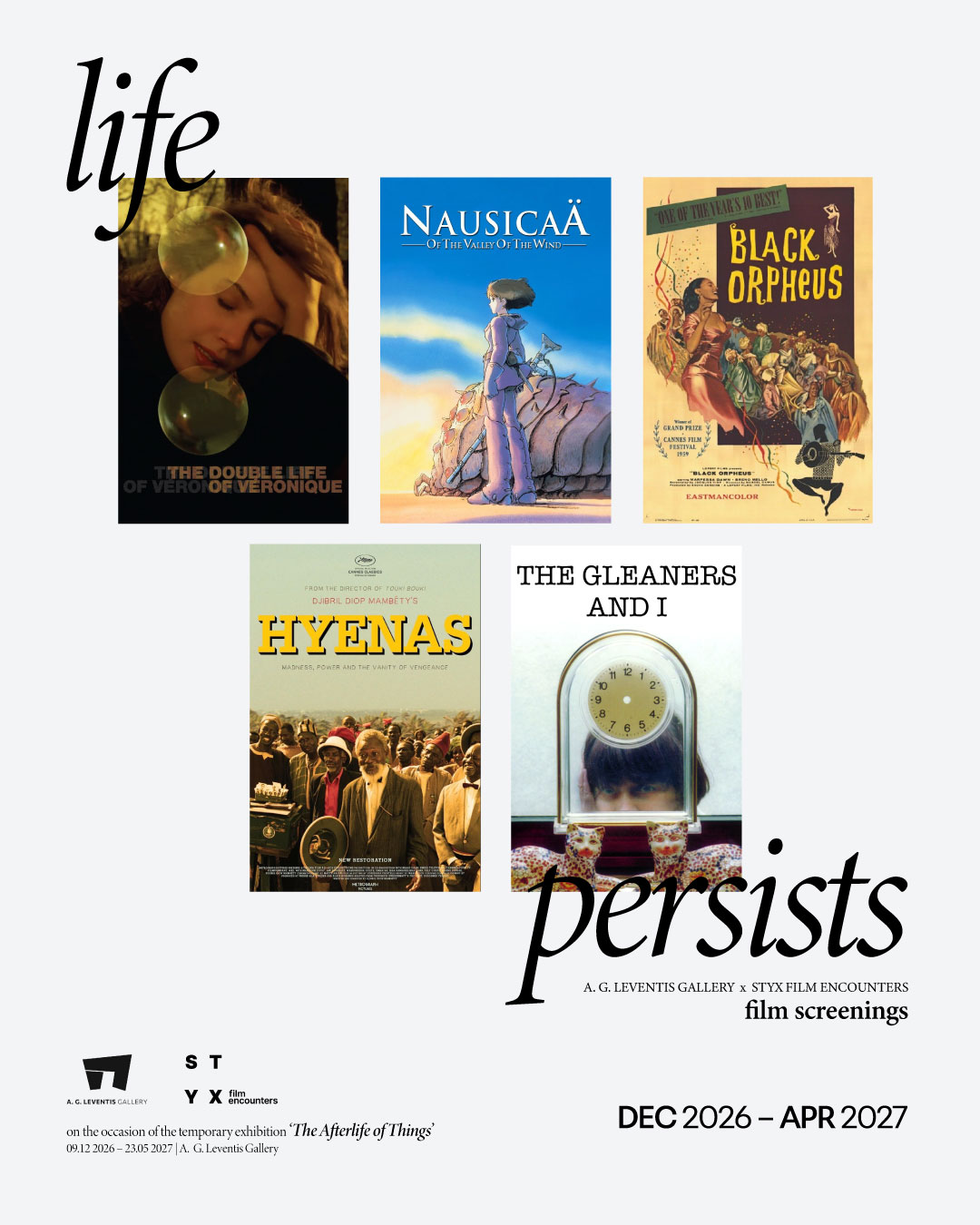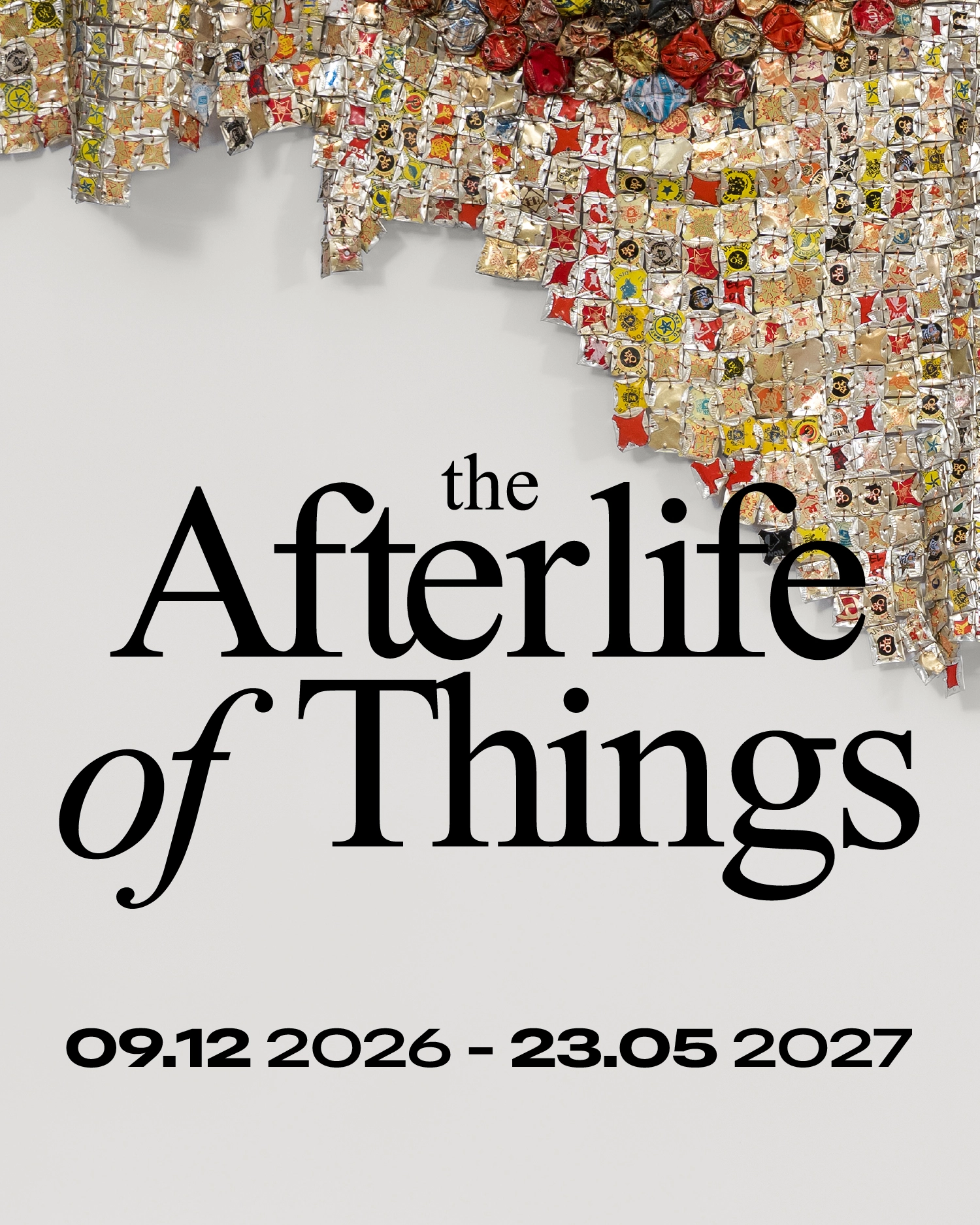





In dialogue with the exhibition The Afterlife of Things, the A. G. Leventis Gallery, in collaboration with STYX Film Encounters, presents Life Insists, a series of five film screenings exploring transformation, regeneration, and the ways in which life continues to find new forms of existence.
Just as the objects featured in the exhibition acquire new forms and meanings while retaining traces of their previous lives, the films explore the multiple lives that people, stories, cultures, and the natural world can inhabit. From the mysterious connection between two human beings and the revival of an ancient myth within a different cultural context, to the regeneration of nature in the aftermath of destruction, the transformation of social values, and the rediscovery of meaning in what has been discarded, the five films examine life’s persistence through processes of continuity, rupture, and reconstruction. Every new form of life emerges from what came before, preserving, transforming, or rejecting elements of the past. Yet survival and transformation do not necessarily imply progress or restoration; they may equally entail loss, distortion, or destruction.
Drawing on diverse cinematic traditions and narratives, Life Insists invites us to reflect on what survives, what is lost, and what acquires new meaning as life persists in finding ways to continue.
SCREENING SCHEDULE | ‘Constantine Leventis’ Auditorium, A. G. Leventis Gallery
Wednesday 09.12.2026 | 19.30
The Double Life of Véronique (1991)
Directed by Krzysztof Kieślowski
Two women, Weronika in Poland and Véronique in France, lead parallel lives, entirely unaware of each other’s existence. They share an identical appearance, similar sensibilities, and an inexplicable, almost metaphysical connection that transcends the boundaries of conscious experience. Through atmospheric cinematography, haunting music, and recurring reflections, Kieślowski creates a poetic meditation on identity, intuition, and the invisible connections that bind human lives together. Can one life somehow continue through another? Can we carry memories and emotions that do not belong to us? The Double Life of Véronique explores the persistence of human experience beyond individual existence, approaching identity as an elusive web of presences, absences, and mysterious affinities.
98’ | Languages: French, Italian, Polish | Subtitles: Greek & English
Wednesday 20.01.2027 | 19.30
Nausicaa of the Valley of the Wind (1984)
Directed by Hayao Miyazaki
On a post-apocalyptic Earth, a thousand years after the collapse of industrial civilisation, humanity struggles to survive among ruined kingdoms, toxic forests, and giant insects. The young Princess Nausicaä, rather than regarding nature as an enemy, seeks to understand the complex balance of the ecosystem and restore the relationship between humanity and the natural world. In Miyazaki’s visionary animated film, destruction does not necessarily mark the end of life, but may also signal the emergence of a new ecological reality. Where humanity sees only decay and danger, nature develops new mechanisms of survival and regeneration. Nausicaä of the Valley of the Wind invites us to reconsider our understanding of destruction and restoration, revealing the possibilities of coexistence and the extraordinary persistence of life through the continual transformation of the natural world.
117′ | Language: Japanese | Subtitles: Greek & English
Wednesday 17.02.2027 | 19.30
Black Orpheus (1959)
Directed by Marcel Camus
The ancient Greek myth of Orpheus and Eurydice is brought to life in the favelas of Rio de Janeiro, amid the vibrant celebrations of Carnival and the rhythms of samba and bossa nova. Orpheus, a young musician, falls in love with Eurydice, but their romance is threatened by the inescapable presence of death. With its dazzling colours and unforgettable music, the film transports a familiar story into a new cultural setting, where Afro-Brazilian traditions intersect with ancient mythology. Rather than merely reproducing the original myth, Black Orpheus transforms it, infusing it with new images, sounds, and cultural meanings. Through this encounter, the film explores the enduring life of stories and the power of artistic reinterpretation to breathe new life into what we inherit from the past.
107’ | Language: Portuguese (Brazilian) | Subtitles: Greek & English
Wednesday 10.03.2027 | 19.30
Hyenas (1992)
Directed by Djibril Diop Mambéty
In an impoverished Senegalese town, the return of a mysterious and immensely wealthy woman raises hopes of economic salvation. Her offer, however, comes with a horrifying condition: the townspeople must agree to murder a man who wronged her in the past. Adapting Friedrich Dürrenmatt’s play The Visit, Senegalese filmmaker Djibril Diop Mambéty relocates the story to a postcolonial African setting, crafting a sharp and often darkly humorous allegory about the power of money, consumerism, and moral corruption. As the promise of wealth gradually transforms the community’s relationships and values, the film raises a disturbing question: what happens when human life itself acquires a monetary value? In Hyenas, a community’s pursuit of a better future exposes the darker side of transformation, when the promise of prosperity and renewal comes at the cost of another person’s life.
110′ | Languages: Wolof & French | Subtitles: Greek & English
Wednesday 21.04.2027 | 19.30
The Gleaners and I (2000)
Directed by Agnès Varda
Taking the traditional practice of gathering leftover crops after the harvest as her starting point, Agnès Varda travels through the French countryside and cities, encountering people who collect food, objects, and materials that society has discarded. Through a tender, playful, and deeply political documentary essay, Varda explores the contradictions of consumer society, the meaning of value, and the creativity that flourishes on the margins of the economy. At the same time, she turns the camera on herself, recognizing in her own filmmaking practice a form of gleaning: collecting images, fleeting moments, and stories that might otherwise disappear. The Gleaners and I presents the act of gathering and repurposing as a means of reconstruction and rediscovery, revealing how what is considered useless, forgotten, or disposable can acquire new purpose, new meaning, and ultimately, a new life.
82′ | Language: French | Subtitles: Greek & English
Reservations required | Limited availability.
For more information & reservations:
| +357 22 668838 (Monday-Friday, 09.00-13.00 & 14.00-16.30)
| rsvp@leventisgallery.org