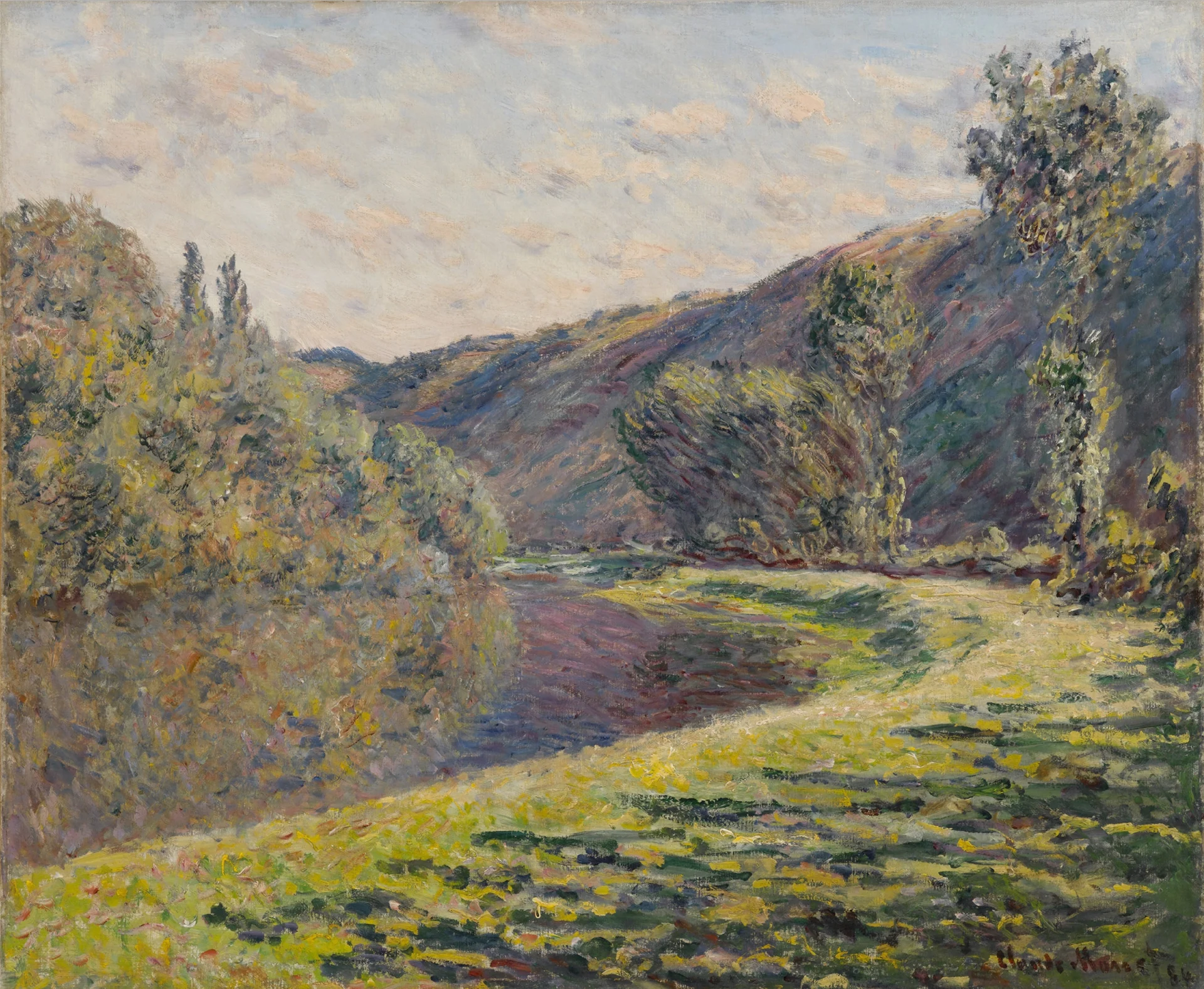
A masterpiece of the Collection is Monet’s La Seine à Jeufosse près de Vernon, of 1884, a work painted in the year following the artist’s move from Poissy to Giverny, near Vernon. This is where he lived and worked until his death in 1926, in the house with the luscious gardens and the lily pond that have been so inextricably linked to his oeuvre. From Giverny, Monet set off to paint the surrounding countryside – the hills, the poplars, the wild flowers and the shifting light of the Seine Valley – where sharp outlines could give way to muted, blurred contours at a moment’s notice, the elements that feature so prominently in his works of this period. It is this richness of the landscape that is particularly redolent in this painting, which depicts the abundant flora of the riverbank at Jeufosse. The foliage is dense, the river’s surface thick with reflections, the juxtaposition of the two making it unclear where the water ends and grassy riverbend begins. Created mostly outdoors, despite the artist’s tendency to rework canvases later in the studio, this view of the riverbend at Jeufosse was painted from the towpath by the river, where Monet must have set up his easel looking upstream, with the Ile de la Merville and the Ile de la Flotte to the left. With its leafy greenery, the work reflects all of Monet’s mastery in capturing the subtleties of light and colour, underlining his well-deserved title as a painter of ‘impressions’.